Power outages in the St. Louis area tends to strike at the worst possible times.
A summer storm rolls through, the lights flicker, and suddenly you’re wondering if the food in your fridge will survive the night. If that scenario sounds familiar, it might be time to think seriously about backup power.
What Counts as a Backup Power Solution?
A backup power solution is any system that keeps your home running when the grid goes down. This can range from a portable generator you wheel out during a storm to a permanently installed standby generator that kicks on automatically within seconds of an outage.
Battery storage systems, often paired with solar panels, are another option growing in popularity across Missouri.
Each option has a different price point, installation process, and level of convenience. The right choice depends on how often your area loses power, how long those outages typically last, and what you absolutely need to keep running.
Why Does Proper Installation Matter So Much?
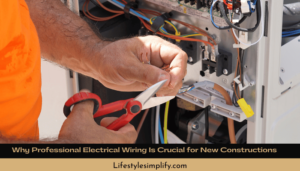
Backup power systems, especially standby generators, involve connecting directly to your home’s electrical system.
Done incorrectly, this creates real risks, including backfeeding electricity into the grid, which can be dangerous for utility workers repairing lines during an outage. A properly installed transfer switch prevents this and keeps your system operating safely and legally.
This is where working with a licensed local electrician makes a real difference. The team at Bates Electric has handled backup power installations throughout the St. Louis metro area and understands both the regional storm patterns and the local permitting requirements that come with these projects.
How Often Does St. Louis Lose Power?
More often than most homeowners expect. Ameren Missouri’s service territory sees regular outages from severe thunderstorms, ice storms, and high wind events, especially in spring and winter.
Some neighborhoods experience multiple outages a year, with a handful stretching past 24 hours after major storms.
If you’ve noticed your street losing power more than once or twice a season, that pattern alone is a strong signal that backup power is worth considering.
What Are the Warning Signs You Need Backup Power?
The clearest sign is frequency. If outages happen several times a year in your area, a backup system stops being a luxury and starts being a practical investment. Duration matters too.
An outage that lasts twenty minutes is an inconvenience. One that lasts two days can mean spoiled groceries, a flooded basement if your sump pump fails, and real safety concerns for anyone using medical equipment at home.
Homeowners with health related equipment, like oxygen concentrators or CPAP machines, should treat backup power as a necessity rather than an option. The same goes for households with well water systems, since no power means no water pressure at all.
Extreme temperatures raise the stakes further. Losing heat during a Missouri ice storm or losing air conditioning during a July heat wave isn’t just uncomfortable, it can become dangerous for young children, older adults, or anyone with a chronic health condition.
What Type of System Fits Your Needs?
Portable generators are the most affordable entry point. They require manual setup during an outage and typically run a handful of essential appliances at once, like a refrigerator, some lights, and a sump pump.
They work well for occasional short outages but demand that someone be home to set them up safely, including proper ventilation to avoid carbon monoxide buildup.
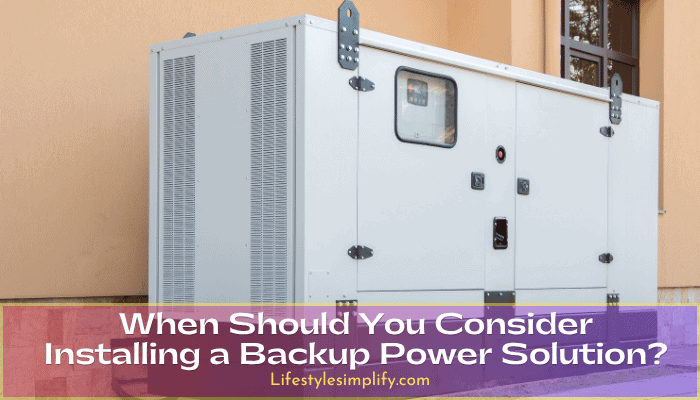
Standby generators are the more robust option. These are permanently installed outside the home, connected directly to your electrical panel, and switch on automatically within seconds of losing power, even if nobody is home.
They can power an entire house, including HVAC systems, for as long as fuel supply allows. The tradeoff is a higher upfront cost and the need for professional installation.
Battery backup systems paired with solar panels offer a quieter, fuel free alternative. They store energy during normal operation and discharge it during an outage.
Capacity is more limited than a standby generator, but for homeowners already interested in solar, pairing the two makes a lot of sense.
How Do You Know Which System Is Right for Your Home?
Start by listing what you can’t afford to lose power to. A sump pump during a storm, a refrigerator full of groceries, a home office that needs to stay online, or medical equipment are common priorities. That list determines the minimum capacity your system needs.
From there, consider your budget and how much manual involvement you’re willing to take on during an outage.
A portable generator asks more of you at the moment but costs less upfront. A standby system costs more initially but requires nothing from you when the power actually goes out.
An electrical contractor can walk through your home’s panel, wiring, and typical energy use to recommend a system sized correctly for your household.
This step matters more than people expect, since an undersized system will struggle to run everything you need, while an oversized one wastes money.
When Should You Actually Make the Call?
The best time to install backup power is before you need it, not during the storm that convinces you. If you’ve already sat through an outage wondering how you’d handle the next one, that’s usually a sign the decision has already been made for you.
Reach out to a qualified electrician to evaluate your home’s setup, discuss your priorities, and recommend a system that fits both your needs and your budget. A short conversation now can save a lot of stress the next time the lights go out.